


Design Formulas

Updated on: October 5, 2026
Why Some Rooms Feel Comforting the Moment You Walk In
Beautiful rooms aren't accidental. Long before we notice the paint color or admire the furniture, our brains are quietly reading the space around us. We notice whether the room feels calm or chaotic, welcoming or distant, restful or overstimulating. The good news? Those feelings aren't magic. They're the result of thoughtful design decisions anyone can learn.
Think of these not as decorating rules but as design formulas—principles that help transform a house into a home.
 Sabine Oak | Comfort Classics
Formula One: Create a Path, Not an Obstacle Course
One of the first things we notice when we enter a home is whether we instinctively know where to go.
A clear path through a room immediately lowers visual stress. Furniture should guide movement rather than interrupt it, and every surface deserves a little breathing room. When every tabletop is crowded and every corner is filled, the eye has nowhere to rest.
Sometimes comfort begins simply by removing something rather than adding more to it.

Formula Two: Layer Light Instead of Flooding It
Lighting shapes mood more quickly than almost any other design choice.
Rather than relying on a single overhead fixture, think in layers. Table lamps, floor lamps, sconces, and candles create pools of warm light that make a room feel personal and inviting.
Think glow instead of glare.
Even statement fixtures perform best when properly scaled. Over a dining table, a chandelier typically hangs about 30–35 inches above the tabletop, creating intimacy without obstructing conversation.
 Veranda Oak | Comfort Enhanced NE+
Formula Three: Invite the Sense of Touch
A room should feel comfortable before anyone sits down.
Texture softens architecture. Linen, wool, boucle, cotton, other natural fibers, and handwoven rugs invite people to relax by appealing to our sense of touch. One simple layering formula is to combine three textiles:
-
a throw across a chair,
-
a pillow resting against it,
-
and a rug or runner that anchors the seating area.
Each layer adds warmth without adding visual clutter.

Formula Four: Let the Room Reach the Floor
Details matter more than we often realize.
Window treatments that hang high and wide make ceilings appear taller while letting more natural light into the room. Drapery panels should gently kiss—or even lightly puddle on—the floor rather than stopping short.
Likewise, bedroom proportions feel more intentional when nightstands are approximately level with the top of the mattress, making everyday use more comfortable while visually balancing the bed.
These subtle alignments create harmony that people often notice without realizing why.

Formula Five: Add Signs of Life
The most welcoming rooms never feel frozen in time.
Fresh flowers, a leafy plant, seasonal branches, or even a subtle signature scent communicate that someone genuinely lives here.
These "living cues" soften perfection and put guests at ease.
 Formula Six: Give People Something to Ask About
The most memorable interiors tell stories.
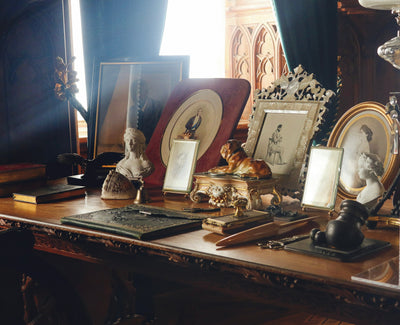
Books stacked horizontally, handmade ceramics grouped in odd numbers, framed travel photographs, inherited objects, or artwork collected over time invite conversation.
A useful styling principle is to work with odd numbers while allowing one organic element, like a branch, a stone, or a plant, to gently break perfect symmetry.
The final step is editing. Nothing should look like a prop.
Not every treasured object needs to be displayed at once. Leaving space between collections often gives each piece greater significance.

Formula Seven: Build From the Ground Up
Comfort often starts with the materials beneath our feet.
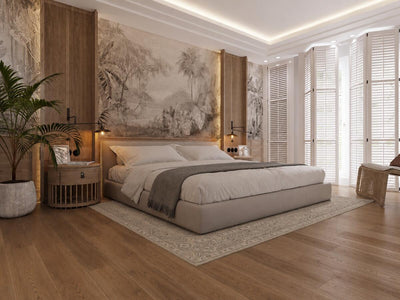
Earthy mid-tone colors, paired with natural materials, create an immediate sense of stability and well-being. Wood, linen, wool, stone, and plaster have a visual warmth that synthetic materials often struggle to replicate.
Better yet, these materials become even more beautiful with age. Unlacquered brass develops character, antique wood gains richness, linen softens, and wool acquires history.
Instead of fighting against time, these materials embrace it.

Formula Eight: Soften the Edges
Curves naturally encourage movement through a space.
A rounded coffee table, an arched doorway, an oval mirror, or a curved sofa gently guides the eye, creating a sense of flow that sharp corners rarely achieve on their own.
The result feels welcoming rather than rigid.

Formula Nine: Let One Piece Carry History
Even the most contemporary rooms benefit from something with a history.
A vintage mirror, an antique cabinet, a hand-knotted rug, or a well-loved chair adds depth that can't be bought brand-new. A “classic” is anything you will still love in ten years.
These pieces serve as visual anchors, connecting today's home with yesterday's craftsmanship.

Formula Ten: Simplify Your Flooring Story
One of the easiest ways to make a home feel cohesive is to simplify what's happening underfoot.
Rather than introducing a different flooring material in every room, consider limiting your home to three primary flooring materials—for instance:
-
hardwood throughout the main living spaces,
-
tile, stone, or vinyl in moisture-prone areas,
-
carpet or area rugs where softness matters most.
Fewer material transitions create better visual flow, making the home feel larger and more cohesive.
When adding rugs, resist the temptation to size down. Larger rugs that allow major furniture pieces to sit comfortably on them almost always make a room feel more spacious.
A Comfortable Home Isn't About Perfection
The rooms we remember rarely have the most expensive furniture or the latest trends.
They're the rooms that quietly welcome us. The lighting is soft, the textures invite us to stay, the materials have character, and the objects tell stories. Nothing feels forced.
When those elements work together, comfort becomes something we experience long before we can explain it.
That's the real design formula.
Shop Floors
-

Sabine OakComfort Classics
$7.39/SF* -

Magnolia OakComfort NE+
$7.99/SF* -

Arrington OakComfort Enhanced NE+
$8.99/SF*


You might be interested in