


Can You Steam Mop LVP Flooring? No & We’ll Explain

Updated on: October 27, 2026
If you’re considering or you’ve just installed gorgeous new luxury vinyl planks, your instinct might be to reach for the deepest clean possible.
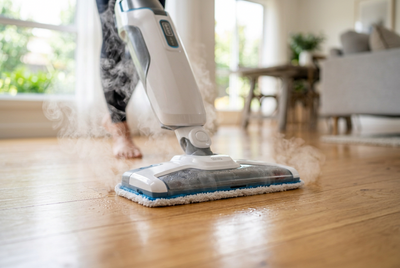
Steam mops promise sparkling sanitation with zero harsh chemicals, leading homeowners everywhere to ask the same big question: Can you steam mop LVP flooring?
No, you should never steam mop LVP flooring.
In fact, if you flip open our official Canopy Care & Maintenance Guide, you’ll find one rule spelled out in clear, bold letters right at the top: DO NOT use a steam mop.
Why is an appliance so popular for tile cleaning completely off-limits for luxury vinyl plank? Let’s break down the science behind what steam does to vinyl, the hidden vulnerability of your subfloor, and the safe, stress-free ways to keep your floors looking brand-new.
Table of Contents
Why You Can Not Steam Mop Luxury Vinyl Floors
We get why it feels counterintuitive.
High-quality LVP like our Comfort, Comfort Enhanced, and Comfort Premium collections are waterproof. If a floor can handle spills, juice boxes, and wet snow boots, why can’t it handle a quick blast of warm vapor?
It all comes down to two culprits: pressurized heat and moisture penetration.
High Heat Breaks Down Structural Layers
A steam mop doesn't just clean with warm water; it forces pressurized steam heated beyond 212°F directly into your floor. Luxury vinyl is built with multiple specialized layers—a protective UV coating, a heavy-duty wear layer, a high-definition design print with matching wood grain (EIR), and a stable core.
Exposing those layers to extreme thermal shock can:
- Soften and degrade the core material.
- Cause boards to warp, curl, or cup at the edges.
- Delaminate the wear layer over time, leaving your planks cloudy and dull.
The Plank Seams Are Not Impermeable
Here is a technical truth that many retail brochures skip: while vinyl planks are waterproof, plank seams are not an impermeable barrier.
When you run a steam mop across your floor, intense pressure forces boiling vapor directly between the micro-crevices of your floating click joints. Once that moisture is pushed down through the seams, it condenses back into liquid water underneath the boards.
Your subfloor—whether it is OSB, plywood, or concrete—is decidedly not waterproof. When water gets trapped beneath a floating floor:
- Wood subfloors swell, buckle, and rot.
- Concrete slabs trap moisture that has nowhere to evaporate.
- Mold and mildew can rapidly form beneath the underlayment, ruining your indoor air quality.
Because trapped moisture cannot escape naturally, any claims suggesting liquids can't reach your subfloor are simply untrue.
What About Thicker WPC vs. Common SPC Cores?
At Canopy, our LVP collections are engineered with a Waterproof Polymer Composite (WPC) core.
Many competing LVP products on the market rely on an SPC (Stone Plastic Composite) core. While quality SPC has its place, many mass-market SPC boards are made exceptionally thin and rigid. That thin profile can make them brittle under heavy impact and prone to locking system failures when installed over imperfect subfloors.
Our WPC core is intentionally much thicker than standard SPC. That extra body gives Canopy Comfort planks superior sound dampening and a noticeably softer, more comfortable feel underfoot, a blessing when walking barefoot on cold mornings.
However, whether your plank features an SPC or a premium WPC core, neither is designed to withstand pressurized steam. Heat expansion affects all vinyl formulations, and steam will void the product warranty on virtually every luxury vinyl floor in the industry.
How to Clean LVP Flooring the Right Way
Keeping your home spotless shouldn’t require specialized machinery or aggressive scrubbing. You never need to wax, finish, or buff Canopy floors. Instead, do the following:
Daily Dry Maintenance
Grit and loose dirt act like sandpaper under foot traffic. Regularly sweep or use a microfiber dust mop. If you vacuum, always use a bare-floor attachment or disengage the beater bar brush so spinning bristles don't scratch your wear layer.
Routine Damp Mopping
When it’s time for a deeper wash, skip the bucket soak. Use a well-wrung microfiber flat mop lightly misted with a properly diluted, neutral pH cleaner. Never flood the surface with pooling water, and let the floor dry thoroughly before letting the family walk across.
Immediate Spill Pickup
While vinyl is tough, it is not entirely stain-proof. Mustard, wine, pet messes, and coffee should be wiped up as soon as they happen. Never leave liquid sitting on plank seams for days, as seepage into the subfloor remains a genuine risk.
Tackling Stubborn Contaminants
Got scuffs, dried craft paint, or sticky residue? According to the official Canopy care guide, you can spot-clean using a clean white terry cloth with:
- Water-based Heavy Duty Goof Off® (in plastic containers)
- Regular Windex®
- Denatured alcohol
Apply the cleaner directly to the cloth (never pour directly on the plank), let it sit on the spot for one minute, and gently buff from the outside inward. Once finished, rinse the spot with a clean, damp towel and blot dry.
Can You Steam Mop Peel and Stick Tiles?
If you have installed our Canopy Flex collection, our self-adhering stone looks featuring patented SetaGrip™ technology, the exact same rule applies: no steam mops.
Canopy Flex replaces traditional ceramic or slate tiles, giving you natural stone looks like warm-veined marble without the nightmare of scrubbing or repairing cracked grout lines. Flex tiles even feature an integrated grout line built directly into the bevel.
But just like floating LVP, introducing super-heated steam can compromise the micro-suction bond underneath. Stick to gentle, neutral pH cleaners to protect your investment for decades to come.
Follow Our Guidelines & Your LVP Will Last for Decades!
Put the steam mop away, grab a reliable microfiber pad, and enjoy comfortable, beautiful floors that are built to handle real life.
Choosing the right foundation for your home shouldn't involve second-guessing or crossed fingers. Whether you’re preparing to install your very first room or dialing in the care routine for a finished space, we’re here to make sure you walk away with gorgeous, regret-free floors that stand strong for decades to come.
If you haven’t purchased your new floors yet and you’re still weighing your options consider Canopy’s lines of self-adhering tiles and wood-look floors as well as our legacy LVP options!
Order a Sample or Find Your Local Canopy Floors Retailer Today!
Our Service Areas Include (but are not limited to):
You might be interested in